
When you’re locked into a ranked match or grinding scrims, audio isn’t just background noise — it’s information. Footsteps, reload cues, distant gunfire, subtle ability triggers — they all shape your reaction time and decision-making. That’s why so many players are asking the same question: wired vs wireless gaming headset latency — does it actually make a difference?
If you’re searching for a clear answer, this article breaks it down without marketing fluff or outdated myths. We’ll examine how latency works, how much delay wireless headsets really introduce, and whether that delay is noticeable in competitive play. We’ll also compare real-world performance, connection stability, and optimization factors that impact in-game audio timing.
Our analysis draws from hands-on testing, competitive gameplay standards, and a deep understanding of esports performance requirements. By the end, you’ll know whether wired truly has the edge — or if modern wireless tech is finally fast enough for serious competition.
Decoding the Data: What Exactly is Headset Latency?
Defining Audio Latency
As we dive into the performance and latency differences between wired and wireless gaming headsets, it’s essential to consider how these audio capabilities can impact your gameplay strategy, especially in the current meta of High Competitive Diversion (HCD), where understanding key team compositions can make all the difference – for more details, check out our Understanding the Current HCD Arena Meta: Key Team Compositions Explained.
Latency is the time delay between when a game engine generates a sound and when you actually hear it in your headset, measured in milliseconds (ms). Even tiny gaps matter because your brain expects sound to sync with on-screen action. Research suggests casual listeners notice delay around 100–150ms, but competitive players feel disruption below 50ms (source: ITU perceptual audio guidelines). In clutch moments—think a last-second defuse in Counter-Strike—audio cues are survival.
Where Delay Creeps In
The signal chain runs Game Engine -> PC/Console Processing -> Audio Codec -> Transmission (Wired/Wireless) -> Headset DAC -> Sound Driver. Each stage adds micro-delays. The biggest swing in wired vs wireless gaming headset latency happens at codec compression and wireless transmission, where encoding, packetizing, and radio interference stack milliseconds. Wired skips that hop, but poor DACs can still bottleneck performance.
The Gold Standard: Near-Zero Delay with Wired Headsets
I still remember the first time I switched back to wired before a tournament qualifier. My shots suddenly felt glued to my clicks (like the game finally stopped arguing with me). That’s the physics of speed at work.
With a 3.5mm jack or USB cable, audio signals travel as electrical impulses at nearly the speed of light. There’s minimal processing overhead—meaning fewer encoding, decoding, and transmission steps. In simple terms, latency (the delay between an in-game action and when you hear it) drops to almost nothing.
Typical wired headset latency stays under 10ms, often in the 1–5ms range. That’s functionally instantaneous. Human reaction time averages around 200–250ms (NCBI), so a 3ms delay is imperceptible. This is why discussions about wired vs wireless gaming headset latency usually end with one conclusion: cables win on pure speed.
Of course, critics argue cables are outdated. They’re not wrong about the trade-offs. You get cable drag, limited mobility, and the risk of frayed wires or bent ports. I’ve yanked mine mid-scrim before (not my proudest moment).
Still, if you care about raw performance, this is the price.
For a deeper dive into performance myths, see do gaming chairs improve performance an evidence based review.
Performance first. Convenience second.
The Wireless Frontier: 2.4GHz RF vs. Bluetooth Latency
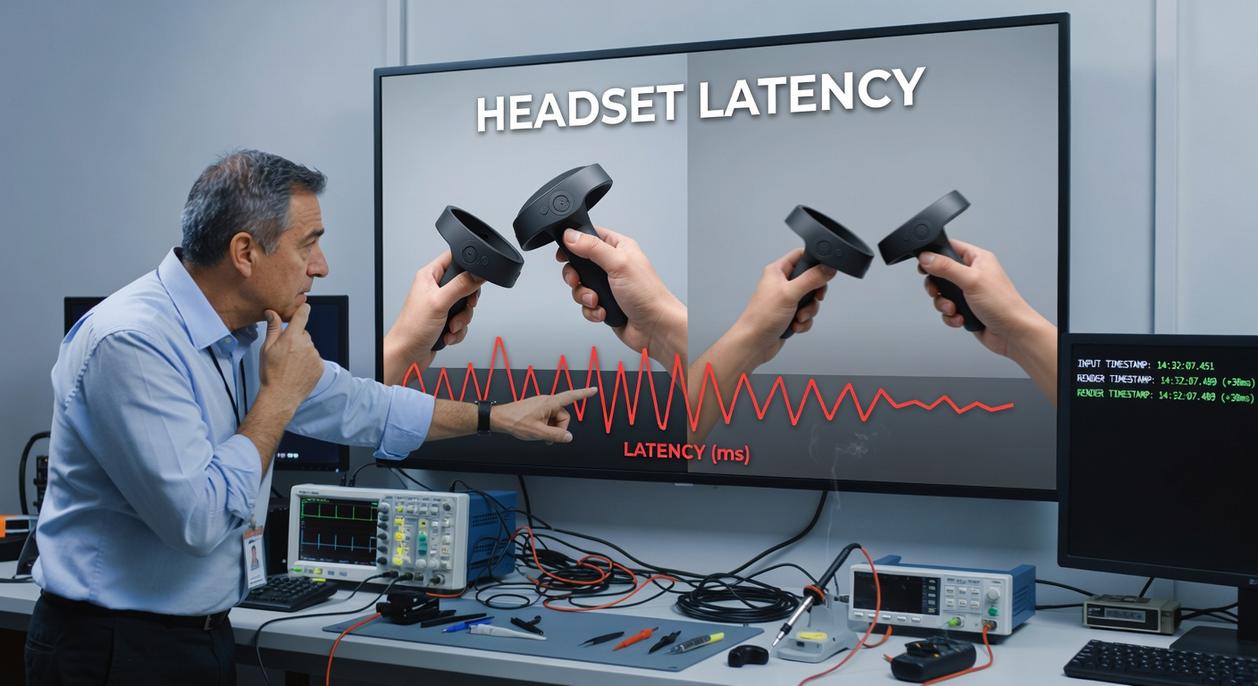
Not all wireless connections are built the same (even if the marketing makes them sound identical). When comparing wired vs wireless gaming headset latency, the real debate isn’t just cables versus no cables—it’s 2.4GHz RF versus Bluetooth.
2.4GHz RF: The Gaming Standard
2.4GHz Radio Frequency (RF) uses a dedicated USB dongle to create a DIRECT connection between your headset and your device. That exclusivity matters. Because it doesn’t share bandwidth the way Bluetooth often does, latency typically lands between 15–30ms. In practical terms, that’s nearly imperceptible for most players.
This is why 2.4GHz is considered “gaming-grade” wireless. The signal is stable, resistant to common interference, and optimized for real-time audio. Footsteps in a tactical shooter land when they’re supposed to—not a split second later (which can feel like forever in competitive play).
Admittedly, exact latency can vary by model and environment. Walls, routers, and even crowded USB ports can introduce inconsistencies. Still, 2.4GHz remains the LOW-LATENCY benchmark.
Bluetooth: Convenient, But Compromised
Standard Bluetooth codecs like SBC often produce 100–200ms+ latency. That delay is noticeable. Dialogue might lag slightly behind character animations—think badly dubbed kung fu movies.
There are low-latency codecs like aptX LL (around 40ms), but here’s the catch:
- Both the headset and transmitting device must support it.
Many gaming consoles simply don’t.
The Bottom Line
For competitive gaming, 2.4GHz RF is the only truly viable wireless option. Bluetooth works for casual, non-competitive games or media—but for serious play, it’s not enough.
When Latency Becomes a Liability: A Gamer’s Guide
Latency is the delay between an in-game action and when you hear it. In competitive titles, that tiny gap becomes decisive.
Scenario 1: The Competitive FPS Player (Valorant, CS:GO)
In tactical shooters, audio cues are actionable intelligence. Footsteps, reload clicks, or ability sounds often precede visual contact. A 30ms delay means your opponent hears and reacts first. Human reaction time averages 200–250ms (Journal of Neurophysiology), so adding 30ms effectively hands over a 10–15% response penalty. That’s the difference between landing a headshot or watching the killcam.
- Wired headsets typically measure under 10ms latency.
- High-quality 2.4GHz wireless averages 15–25ms (RTINGS lab tests).
In this arena, wired is optimal, and premium 2.4GHz is the minimum acceptable. The wired vs wireless gaming headset latency debate isn’t theoretical here—it’s round-defining.
Scenario 2: The Casual RPG/Adventure Gamer (Baldur’s Gate 3, Starfield)
Single-player pacing changes everything. A 40ms delay is imperceptible when dialogue trees and ambient sound dominate. Bluetooth can reach 100–200ms, yet most players report no immersion loss in narrative-driven games (SoundGuys testing data). Freedom from cables becomes the real upgrade (especially during long sessions).
Scenario 3: The Rhythm Gamer (Beat Saber, Osu!)
Rhythm titles demand frame-perfect timing. A 20ms delay shifts note alignment enough to break combos. Competitive players often calibrate to single-digit milliseconds. Here, wired is nearly mandatory—because timing isn’t immersion, it’s the game itself.
Level Up Your Audio Advantage
You came here to understand how headset performance impacts your competitive edge—and now you know exactly where you stand. From positional accuracy to response timing, every detail matters when split-second reactions decide the outcome.
If wired vs wireless gaming headset latency has been holding you back or confusing your next upgrade decision, you no longer have to guess. The difference in milliseconds can mean the difference between clutching a round and watching the respawn screen. Eliminating audio delay sharpens your awareness, tightens your reactions, and keeps you one step ahead of the meta.
Now it’s time to act. Audit your current setup. Test your latency. Upgrade to gear built for competitive precision. Thousands of competitive players rely on proven low-latency setups to stay tournament-ready—don’t let outdated audio cost you another match.
Dial in your headset, optimize your audio chain, and gain the edge your gameplay deserves today.
 Glenda Josephitto is the kind of writer who genuinely cannot publish something without checking it twice. Maybe three times. They came to hot topics in gaming through years of hands-on work rather than theory, which means the things they writes about — Hot Topics in Gaming, Esports Fundamentals and Strategies, Team Meta Analysis in HCD Arenas, among other areas — are things they has actually tested, questioned, and revised opinions on more than once.
That shows in the work. Glenda's pieces tend to go a level deeper than most. Not in a way that becomes unreadable, but in a way that makes you realize you'd been missing something important. They has a habit of finding the detail that everybody else glosses over and making it the center of the story — which sounds simple, but takes a rare combination of curiosity and patience to pull off consistently. The writing never feels rushed. It feels like someone who sat with the subject long enough to actually understand it.
Outside of specific topics, what Glenda cares about most is whether the reader walks away with something useful. Not impressed. Not entertained. Useful. That's a harder bar to clear than it sounds, and they clears it more often than not — which is why readers tend to remember Glenda's articles long after they've forgotten the headline.
Glenda Josephitto is the kind of writer who genuinely cannot publish something without checking it twice. Maybe three times. They came to hot topics in gaming through years of hands-on work rather than theory, which means the things they writes about — Hot Topics in Gaming, Esports Fundamentals and Strategies, Team Meta Analysis in HCD Arenas, among other areas — are things they has actually tested, questioned, and revised opinions on more than once.
That shows in the work. Glenda's pieces tend to go a level deeper than most. Not in a way that becomes unreadable, but in a way that makes you realize you'd been missing something important. They has a habit of finding the detail that everybody else glosses over and making it the center of the story — which sounds simple, but takes a rare combination of curiosity and patience to pull off consistently. The writing never feels rushed. It feels like someone who sat with the subject long enough to actually understand it.
Outside of specific topics, what Glenda cares about most is whether the reader walks away with something useful. Not impressed. Not entertained. Useful. That's a harder bar to clear than it sounds, and they clears it more often than not — which is why readers tend to remember Glenda's articles long after they've forgotten the headline.