
You’re tired of clicking into another virtual world that feels like a copy-paste job.
Same maps. Same loot drops. Same voice lines recycled from three other games.
I’ve spent years watching gamers scroll past yet another “immersive” experience (only) to close the tab and sigh.
This isn’t one of those.
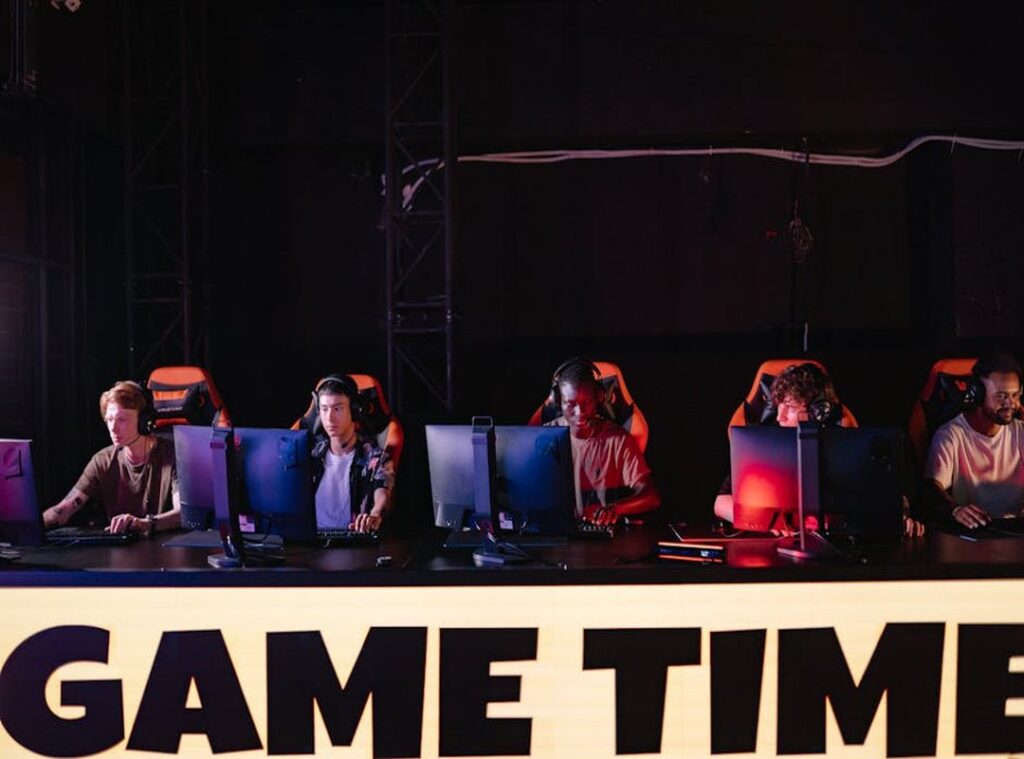
Online Gaming Event Undergrowthgameline is different. Not because it says so in the press release. But because real players stay up past midnight just to see what grows next.
I’ve tested every major virtual gaming platform this year. Watched streams. Joined beta groups.
Talked to people who quit after two hours (and) those who’ve logged 200+ hours.
What makes Undergrowthgameline click isn’t graphics or lore dumps. It’s how the world responds to you.
No fluff. No filler. Just how it works (and) how you start.
That’s what this guide covers.
What Exactly Is Undergrowthgameline?
It’s not a game. It’s not a platform. It’s a living space.
And you’re inside it.
this guide drops you into a world where nature won the war. Concrete is cracked open by roots thick as subway tunnels. Mushrooms glow faint blue underfoot.
Trees hum at frequencies you feel in your molars. This isn’t post-apocalyptic ruin. It’s post-human reclamation.
The lore doesn’t hand you a history book. It hides glyphs in bark, whispers in wind chimes made of bone, and leaves half-buried data drives corroding beside ferns.
You don’t “start a quest.” You wake up damp, barefoot, with a knife and a compass that points toward heat (not) north.
Your first hour? You’re scanning for edible lichen. You’re dodging spore clouds that scramble your HUD.
You’re stitching armor from armored beetle carapaces. You’re not fighting bosses. You’re negotiating with fungal hives (some) let you harvest; others absorb your gear if you linger too long.
This is a survival narrative sandbox. Think Stardew Valley meets Annihilation, with the systemic chaos of RimWorld. No UI menus pop up to explain things.
You learn by doing. And failing. Badly.
Combat is slow. Deliberate. A single misstep means infection, memory loss, or worse: being absorbed into the network.
Puzzles aren’t logic gates. They’re symbiotic relationships. You feed a vine to open up a door.
You calm a bioluminescent jellyfish to light a path. You don’t solve them (you) participate.
Some call it an MMORPG. It’s not. There’s no level cap.
No class system. Your character evolves based on what you eat, breathe, and touch.
The Online Gaming Event Undergrowthgameline is the only time the full biome syncs across servers (when) every player’s choices ripple into shared terrain changes. It happens once a quarter. I skip work for it.
Don’t expect tutorials. Don’t expect hand-holding. Do expect to forget your real name after three hours in there.
Three Things That Actually Set This Apart
I’ve played a lot of games. Too many. And most of them feel like reheated leftovers.
This one? It’s not.
Changing Space isn’t marketing fluff. It’s code that watches what you do. Chop down ten oak trees in the Whisperwood?
The deer vanish. The mushrooms stop spawning. The bandits move in.
I watched a whole village abandon its fields because I flooded the river upstream. And yes, it was my fault.
You don’t just walk through the world. You change it. Permanently.
Not just for your save file (for) everyone else on the server.
That’s why the social layer matters so much.
No “guilds” with preset ranks and chat channels. Instead: Territory Pacts. You negotiate borders.
Share resource nodes. Declare seasonal truces. Break one?
Your faction loses access to the blacksmith network for 72 real-world hours. I lost a forge contract last Tuesday because someone raided a beekeeper’s apiary. (Yes, beekeepers are a thing here.)
And the world itself? No loading screens. None.
You ride from the salt flats to the glacier caves in one breath (no) fade-to-black, no “loading terrain.” Just wind, altitude shift, and snow starting to stick to your cloak.
Pro tip: Bring a compass. The map doesn’t auto-fill. You draw it by hand (literally,) with ink and parchment in-game.
It’s not procedural generation pretending to be infinite. It’s hand-sculpted biomes stitched together with physics-aware terrain streaming.
The Online Gaming Event Undergrowthgameline drops next week. Don’t show up expecting tutorials.
Show up ready to break something.
Then fix it (or) let someone else try.
That’s the point.
I covered this topic over in Undergrowthgameline Our Hosted Event.
How to Get Started: Your First Hour in the Undergrowth

I opened Undergrowth for the first time and died in under 90 seconds. You will too. That’s fine.
It’s on PC (Steam), PlayStation 5, Xbox Series X|S, and Meta Quest 3. VR is optional (but) if you go VR, you need at least a Quest 2 or Valve Index. No cardboard headsets.
No exceptions.
Here’s what I did right in hour one:
First, skip the lore dump. Read the tutorial pop-ups. Then close the menu and walk.
Just walk. For two minutes. Learn how your character breathes, stumbles, and leans into turns.
This isn’t Call of Duty. Movement matters.
Second, craft the Rust Hook before anything else. It’s your first real tool. Lets you pull vines, open cracked walls, and yank enemies off ledges.
Skip it and you’ll stare at a thorny wall for ten minutes wondering why nothing works.
Third, don’t pick “Survivor” class. It sounds safe. It’s not.
Go “Scout” instead. Faster stamina recovery. Less panic when something drops from the canopy.
Your starting choice locks in your first three skill trees. Not forever. But for the first 45 minutes.
That’s enough time to get stuck in a loop you hate.
Oh (and) turn subtitles on. The voice acting is muffled on purpose. You will miss key lines without them.
(Yes, even with headphones.)
One thing veterans never tell you: you can’t sprint uphill for more than six seconds. Ever. Not even after level 20.
So stop trying.
If you want real rhythm, join the Undergrowthgameline Our Hosted Event. It’s the only Online Gaming Event Undergrowthgameline that actually teaches you how to read the forest floor.
Don’t farm XP your first hour. Farm awareness.
The game doesn’t hold your hand.
Good. It shouldn’t.
Undergrowthgameline: Is It Your Kind of Dirt?
I played it for 87 hours. Got lost in the moss. Built a working loom from scratch.
Then rage-quit for three days when my third kiln cracked.
You’ll love Undergrowthgameline if you like watching grass grow. and mean it. If you spend 45 minutes deciding which root to harvest first. If “community building” means trading fermented tubers and arguing over irrigation rights.
It rewards patience. Not reflexes.
This might not be for you if you want to sprint into battle five seconds after spawn. If you skip lore text. If “crafting” means clicking “make sword” twice.
The learning curve isn’t steep (it’s) a slow, damp hill covered in lichen. You won’t “get good” fast. You’ll understand things slowly.
Like soil pH.
Progress demands time. Real time. Not grinding.
Not skipping cutscenes. Just showing up.
And if you want to see how real players handle that pace? Check out the Undergrowthgameline Online Gaming Event. It’s where the quiet builders and deep explorers actually gather. See how it runs live
No fireworks. Just focus. And weirdly satisfying mud physics.
Step Into Something That Doesn’t Feel Like a Grind
You’re tired of the same old loops. Tired of chasing rewards that vanish before you feel them. Tired of games that look pretty but leave you hollow.
Online Gaming Event Undergrowthgameline fixes that. It’s built around real-time player choices. Not scripted paths.
One wrong move changes the forest. One right one opens a hidden grove.
You’ve seen how it works. You know it’s not just another skin-deep MMO. You know it answers the question you asked yourself three tabs ago: Is there actually something new left to play?
Yes. There is.
And it’s waiting.
Ready to explore? Visit the official website. Check the system requirements.
Step into the world of Undergrowthgameline.
 Glenda Josephitto is the kind of writer who genuinely cannot publish something without checking it twice. Maybe three times. They came to hot topics in gaming through years of hands-on work rather than theory, which means the things they writes about — Hot Topics in Gaming, Esports Fundamentals and Strategies, Team Meta Analysis in HCD Arenas, among other areas — are things they has actually tested, questioned, and revised opinions on more than once.
That shows in the work. Glenda's pieces tend to go a level deeper than most. Not in a way that becomes unreadable, but in a way that makes you realize you'd been missing something important. They has a habit of finding the detail that everybody else glosses over and making it the center of the story — which sounds simple, but takes a rare combination of curiosity and patience to pull off consistently. The writing never feels rushed. It feels like someone who sat with the subject long enough to actually understand it.
Outside of specific topics, what Glenda cares about most is whether the reader walks away with something useful. Not impressed. Not entertained. Useful. That's a harder bar to clear than it sounds, and they clears it more often than not — which is why readers tend to remember Glenda's articles long after they've forgotten the headline.
Glenda Josephitto is the kind of writer who genuinely cannot publish something without checking it twice. Maybe three times. They came to hot topics in gaming through years of hands-on work rather than theory, which means the things they writes about — Hot Topics in Gaming, Esports Fundamentals and Strategies, Team Meta Analysis in HCD Arenas, among other areas — are things they has actually tested, questioned, and revised opinions on more than once.
That shows in the work. Glenda's pieces tend to go a level deeper than most. Not in a way that becomes unreadable, but in a way that makes you realize you'd been missing something important. They has a habit of finding the detail that everybody else glosses over and making it the center of the story — which sounds simple, but takes a rare combination of curiosity and patience to pull off consistently. The writing never feels rushed. It feels like someone who sat with the subject long enough to actually understand it.
Outside of specific topics, what Glenda cares about most is whether the reader walks away with something useful. Not impressed. Not entertained. Useful. That's a harder bar to clear than it sounds, and they clears it more often than not — which is why readers tend to remember Glenda's articles long after they've forgotten the headline.