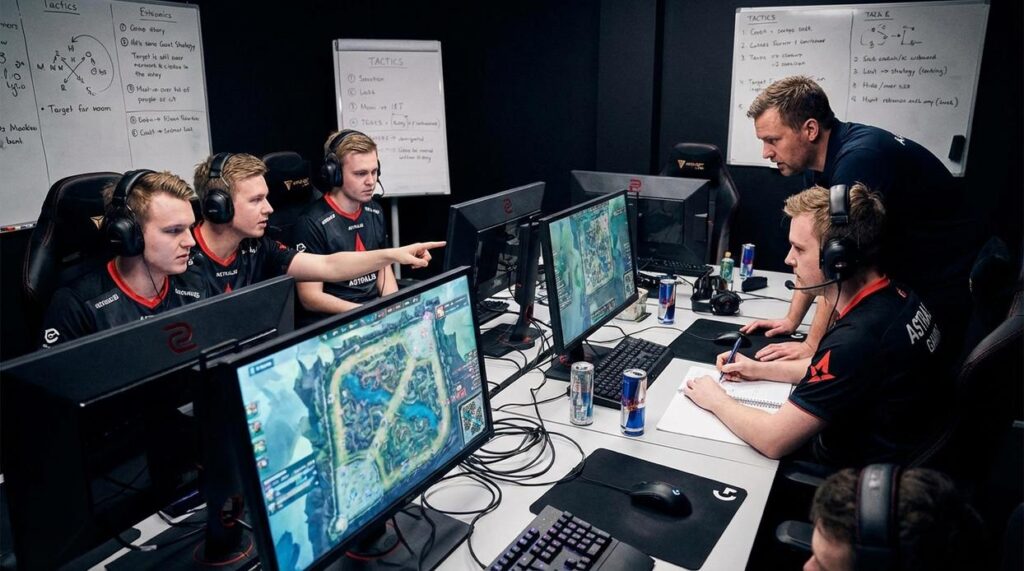
If you’ve ever wondered what it really takes to compete at the highest level, you’re likely searching for a clear, realistic look at a professional gamer daily routine. Not the highlight reels. Not the social media clips. The actual structure, discipline, and habits that separate elite players from everyone else.
This article breaks down how top competitors organize their day—from mechanical practice and VOD review to physical training, mental conditioning, and recovery. You’ll see how time is allocated, why structured practice matters more than raw hours, and how small optimizations compound into major performance gains.
To ensure accuracy, this guide draws on insights from experienced esports coaches, performance analysts, and high-ranking players across multiple competitive titles. The goal is simple: give you a practical, experience-backed framework you can adapt to your own grind.
Whether you’re aiming for ranked dominance or a pro contract, this breakdown shows what the daily commitment truly looks like—and how to build one that works.
Beyond the Screen: The Disciplined Life of a Pro Gamer
Casual Grind vs. Elite Structure
Many assume going pro means playing ten hours straight. Casual grind (A) is endless ranked matches, erratic sleep, and energy drinks. Elite structure (B) is a calibrated professional gamer daily routine built on review blocks, scrims, strength training, and mindset work. One chases highlight reels; the other tracks metrics and VOD analysis. Discipline beats volume. Pros schedule mechanics drills, team strategy sessions, meal timing, and recovery—like traditional athletes (think Formula 1 pit crews, not arcade racers). Long hours matter, but intentional reps, coaching feedback, and sleep cycles separate contenders from contenders-in-chat.
The Morning Block: Priming the Mind and Mechanics
8:00 AM – 9:00 AM: The Non-Negotiable Start
Consistency is the cheat code. Waking up at the same time daily stabilizes your circadian rhythm (your body’s internal clock), which directly impacts reaction speed and focus (Harvard Health). Hydration first—your brain is nearly 75% water, and even mild dehydration can impair attention and memory (National Academies of Sciences). Pair that with a nutrient-dense breakfast—protein, complex carbs, healthy fats—to avoid the 11 AM crash.
Some argue gamers can roll out of bed and queue instantly. Sure, you can. You can also skip warm-ups before leg day. Results won’t be elite. Physical readiness fuels cognitive sharpness—think of it as powering up before the boss fight.
9:00 AM – 10:00 AM: Physical and Mental Warm-Up
This is your Avengers assemble moment.
- Light cardio to increase blood flow
- Dynamic stretching for mobility
- Meditation to sharpen focus
- Reaction-time trainers to prime neural pathways
Mental warm-ups improve attention control and stress regulation (APA). It’s not mystical—it’s mechanics.
10:00 AM – 12:00 PM: Individual Skill Refinement
The first session isn’t ranked chaos. It’s deliberate practice—defined as focused repetition with feedback (Anders Ericsson research).
- Aim drills
- Movement patterns
- Character combos
- Build order execution
This professional gamer daily routine builds precision before pressure. Like Rocky running the steps—minus the snow and 80s soundtrack.
Peak Performance Hours: Team Scrims and Strategic Deep Dives
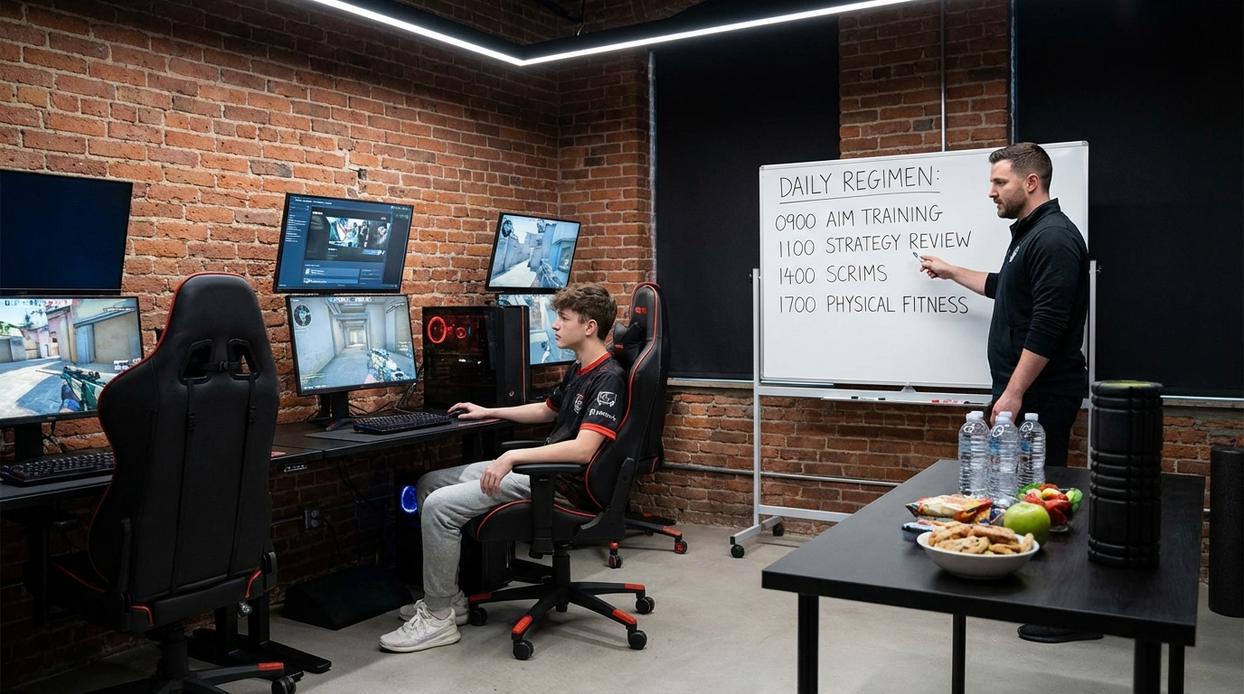
12:00 PM – 1:00 PM: Fuel and Pre-Scrim Briefing
Every serious professional gamer daily routine builds toward this window. First, there’s a structured lunch—balanced carbs for sustained energy, lean protein for focus (yes, nutrition actually matters). Then comes the pre-scrim briefing.
“Today we’re stress-testing the new comp,” a coach might say, pointing at a draft board. In esports, a composition (or comp) refers to the specific combination of characters, roles, or loadouts a team selects for a match. Meanwhile, analysts outline measurable goals: cleaner rotations, tighter objective control, improved mid-game communication.
Some players argue that over-structuring this hour kills creativity. However, most elite teams counter that discipline creates freedom. As one in-game leader put it, “We don’t wing it. We iterate.” And that difference shows up on match day.
1:00 PM – 4:00 PM: The Scrim Block
Now the real work begins. Scrims—short for scrimmages, or practice matches against other pro teams—form the backbone of improvement. But contrary to popular belief, the objective isn’t just winning.
Instead, teams test specific strategies under pressure. For example, they may intentionally draft a risky late-game scaling comp to evaluate early-game survivability. “Play it out, even if we’re down,” a coach might insist. “We need the data.”
In other words, scrims are controlled experiments. Communication protocols, timing windows, and map positioning are stress-tested repeatedly. If you want a deeper breakdown of how scrims build championship rosters, explore how scrim culture shapes competitive gaming success.
4:00 PM – 5:30 PM: VOD Review
Finally—and often painfully—comes VOD (Video on Demand) review. This is where illusions disappear.
“Pause it there,” someone says. The screen freezes. A missed rotation. A late cooldown. A half-second hesitation.
Still, it’s not all criticism. Successful executions are highlighted and reinforced. Pro tip: top teams tag recurring mistakes in shared notes to track patterns over weeks, not just days.
Grueling? Absolutely. Necessary? Without question.
The Essential Disconnect
From 5:30 PM – 7:00 PM, stepping away from the screen isn’t optional; it’s survival. This is the block for gym sessions, pickup basketball, stretching, or simply walking outside. I’ve seen players argue that more scrims equal more wins. I disagree. Burnout is real, and reaction time drops when your brain never powers down (even machines overheat). Physical activity increases blood flow and supports cognitive performance, which research links to improved executive function (Harvard Health Publishing). That’s why the professional gamer daily routine builds in movement on purpose. It preserves mental stamina and keeps tilt from compounding into full-blown fatigue.
From 7:00 PM – 8:00 PM, team dinner matters more than people admit. Shared meals build trust; psychologists call this social cohesion, the bond that improves coordinated performance (APA). Talking about anything except the meta resets the mind. SOME TEAMS SKIP THIS AND WONDER WHY COMMS COLLAPSE.
Health as a weapon isn’t dramatic; it’s practical. Nutritionists optimize macros for steady energy, while sports psychologists train focus and emotional regulation. Treating players like traditional athletes isn’t hype. It’s the competitive edge. Ignore recovery, and you’re not grinding harder, you’re just shortening your career. Longevity wins championships, period. Ultimately.
The Evening Session: Content, Community, and Cooldown
8:00 PM–10:00 PM shifts into ranked play or streaming—structured freedom within a professional gamer daily routine. Solo queue sharpens mechanics (micro-level execution skills) under unpredictable conditions. Research in the Journal of Sports Sciences shows variable practice improves decision-making speed by up to 15%. Streaming adds social pressure, mirroring tournament stress (chat can be harsher than playoffs).
10:00 PM onward is a Digital Sunset. No screens. Reading or music instead. The CDC confirms 8–10 hours of sleep boosts reaction time and memory consolidation—critical for cognitive recovery. Skipping wind-down? That’s trading tomorrow’s performance for tonight’s highlights.
Building Your Own Pro-Level Routine
A coach once told me, “Talent is common. Structure is rare.” That’s the gap between amateur and elite. A professional gamer daily routine isn’t endless grinding; it’s planned blocks: structured warm-ups, focused scrims, VOD review, recovery, and REAL SLEEP.
“I used to queue for ten hours,” one player admitted. “Then I started reviewing my losses, and everything changed.”
Some argue rigid schedules kill creativity. Fair. But discipline builds freedom—the kind that shows up under pressure.
Start small. Add a 20-minute warm-up or nightly VOD review this week. CONSISTENCY WINS. Pick one habit. Lock it in.
Mastering Your Edge in Competitive Play
You came here to understand what it really takes to compete at a higher level — and now you have the blueprint. From refining mechanics and analyzing team meta shifts to optimizing your setup and sharpening decision-making, you’ve seen how small improvements compound into competitive advantages.
The biggest pain point for most players isn’t talent — it’s inconsistency. Missed practice structure. Poor adaptation to meta changes. Wasted hours grinding without measurable progress. That’s exactly where a structured professional gamer daily routine becomes your unfair advantage. Discipline beats motivation every time.
Now it’s your move.
If you’re serious about climbing ranks, dominating scrims, or breaking into competitive brackets, start implementing a structured routine, track your performance metrics, and upgrade the weak points in your gameplay and gear. Don’t just play more — train smarter.
Thousands of competitive players rely on our in-depth strategy breakdowns, meta analysis, and optimization guides to level up faster. If you’re ready to stop plateauing and start progressing, dive into our advanced guides, apply what you’ve learned today, and take control of your competitive future now.